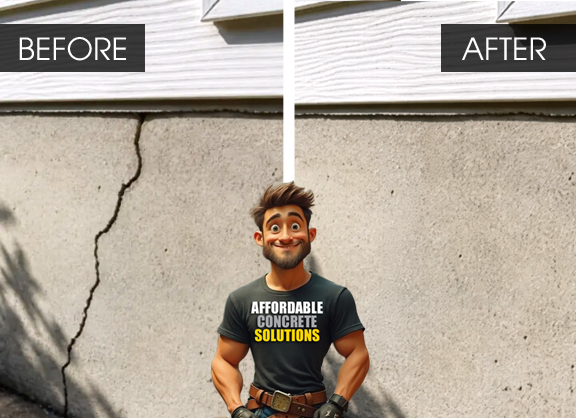
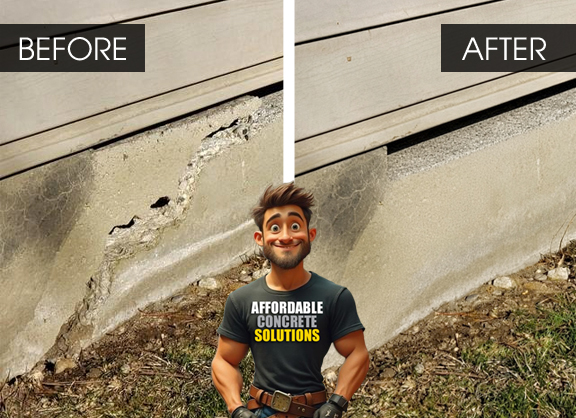
Your home’s foundation is one of the most important parts of its structure. It supports the weight of your house and helps keep everything above it level and secure. However, when the ground beneath your home begins to shift or settle, foundation problems can develop. Cracks in basement walls, uneven floors, and doors that suddenly stick may all point to a foundation issue. At Affordable Concrete Solutions, we provide professional cracked foundation repair in Newburgh, Indiana, and surrounding communities. We offer foundation stabilization solutions, including push pier installation, to help homeowners protect their properties.
Foundation cracks are not something you should automatically ignore. While some small cracks occur naturally as concrete cures, others develop because the foundation is moving. Fortunately, there are solutions available. Push piers can provide additional structural support by transferring the weight of your home to deeper, more stable soil.
If you’ve noticed changes in your foundation, our team can help you understand what may be happening. We work with homeowners throughout the Tri-State area to identify foundation concerns and recommend practical repair options.
Foundation damage can happen for several reasons. In many cases, changing soil conditions are responsible. The ground beneath your home plays an important role in supporting the foundation. When that soil becomes unstable, the structure above it can begin to move.
Homes in Newburgh and the surrounding communities experience changing weather throughout the year. Heavy rain, dry summers, freezing temperatures, and seasonal moisture changes can all affect the soil around a foundation.
Some common causes of foundation cracks include:
Soil Settlement: Soil beneath a home can compress over time. As a result, the foundation may begin sinking in certain areas.
Poor Drainage: Water collecting near your foundation can soften the surrounding soil and contribute to movement.
Expansive Clay Soil: Some soils expand when wet and shrink during dry weather. These changes can place pressure on foundation walls and footings.
Erosion: Water flowing beneath or around a foundation may wash away supporting soil.
Improper Soil Compaction: When soil isn’t properly prepared during construction, settlement may occur later.
Changing Groundwater Conditions: Fluctuations in groundwater can affect the stability of the soil supporting your home.
Although the cause isn’t always obvious, identifying the source of the movement is an important first step. Simply covering a crack won’t solve a problem caused by foundation settlement.
Foundation problems often start with small changes. You might notice a hairline crack in the basement or a door that doesn’t close quite right. Over time, however, additional symptoms may appear.
Pay attention to these common warning signs:
Stair-Step Cracks in Brick: Cracks that follow mortar joints in a stair-step pattern may indicate differential foundation settlement. These often appear near exterior corners, windows, and doorways.
Horizontal Basement Wall Cracks: Horizontal cracks can indicate pressure against the foundation wall. Depending on the circumstances, they may signal serious structural concerns.
Uneven Floors: When portions of your foundation settle, the floors above them may become uneven or sloped. You might also notice furniture shifting or doors moving out of alignment.
Sticking Doors and Windows: Foundation movement can affect the framing throughout your home. Consequently, doors may become difficult to open, and windows may no longer close properly.
Gaps Around Trim: New gaps around ceilings, windows, and door frames can sometimes indicate structural movement.
Cracks in Drywall: Interior wall cracks near windows, doors, and corners may develop when parts of the structure begin shifting.
Of course, one crack doesn’t automatically mean your foundation needs push piers. However, several symptoms appearing together deserve attention. A professional evaluation can help determine whether the foundation is settling.
Push piers are a foundation stabilization system designed to support homes experiencing settlement. They use engineered steel pier sections to transfer the weight of a structure through weaker surface soils to deeper, suitable supporting soil or load-bearing strata.
Unlike cosmetic crack repairs, push piers address the underlying support problem.
The system uses hydraulic equipment to drive steel sections into the ground beneath the foundation. Special brackets connect the piers to the foundation footing. Once the piers reach suitable supporting conditions and the required installation capacity, they can help stabilize the structure.
In some situations, push piers can also help lift portions of a settled foundation. This process requires careful control because every home responds differently. The condition of the concrete, structural design, and soil conditions all influence how much movement may be possible.
For homeowners dealing with foundation settlement in Newburgh, push piers may offer a practical alternative to extensive foundation reconstruction.
Understanding the installation process can make foundation repairs feel less overwhelming. Although every project is different, push pier installation generally follows several steps.
1. Foundation Evaluation
First, we examine the foundation and look for signs of settlement. This includes checking visible cracks, structural movement, and other areas of concern.
2. Selecting Installation Locations
Next, the appropriate pier locations are identified. Proper placement helps ensure the system supports the areas experiencing settlement.
3. Preparing the Foundation
Small areas near the foundation footing are excavated to provide access for the installation equipment. This allows the brackets and pier sections to be installed.
4. Installing Steel Brackets
Specialized brackets attach to the foundation footing. These components connect the structure to the push pier system.
5. Driving the Push Piers
Hydraulic equipment drives steel pier sections into the ground. Additional sections are added until the installation reaches suitable supporting conditions and the required capacity.
6. Stabilizing the Structure
Once the piers are installed, they are secured to the foundation. Depending on the condition of the home, controlled lifting may also be possible.
7. Completing the Project
Finally, the installation areas are completed. The push pier system remains beneath the foundation to provide ongoing structural support.
Every project requires careful consideration. Soil conditions, foundation design, access, and structural loads all affect the installation plan.
When your foundation begins settling, finding a dependable solution is important. Push piers offer several benefits for homes with the right soil and structural conditions.
Long-Term Structural Support: Push piers transfer the weight of your home to deeper supporting soil. This helps address settlement caused by inadequate support near the surface.
Targets the Underlying Problem: Filling a visible crack may improve its appearance, but it doesn’t stop foundation movement. Push piers address the support beneath the foundation instead.
Potential Foundation Lifting: In certain situations, hydraulic equipment can help lift settled portions of a structure. This may improve some symptoms associated with foundation movement.
Limited Excavation: Push pier installation generally requires excavation in specific locations around the foundation. Therefore, it can often avoid the extensive disruption associated with major reconstruction.
Added Stability: Once properly installed, the steel pier system remains in place and continues transferring structural loads to supporting soil.
However, push piers aren’t appropriate for every foundation problem. For example, a wall experiencing inward movement from soil pressure may require a different repair method. That’s why understanding the cause of the damage matters.
It’s easy to put off foundation repairs when the damage seems minor. Nevertheless, cracks caused by ongoing settlement can become more noticeable over time.
For example, a small crack may continue growing as the foundation moves. Additional cracks can also appear in nearby walls, floors, and exterior brickwork.
Furthermore, foundation openings can allow water to enter basements and crawl spaces. Moisture intrusion may damage surrounding materials and create uncomfortable conditions inside your home.
Addressing foundation concerns early can help you avoid additional damage. Rather than waiting for doors to stop closing or floors to become noticeably uneven, consider having the problem evaluated when you first notice changes.
At Affordable Concrete Solutions, we understand that foundation problems can create stress for homeowners. Your home is a major investment, and protecting its structural stability should be a priority.
We provide foundation repair solutions designed to address settlement and structural concerns. Our goal is to help you understand the problem and find a practical approach to restoring proper support.
Whether you’ve noticed stair-step cracks in your brick, horizontal cracks in your basement, or signs that part of your home is sinking, we’re ready to help you explore your options.
We proudly serve homeowners throughout southwestern Indiana and western Kentucky, including:
Newburgh, Indiana: Professional cracked foundation repair and push pier solutions for settling homes.
Evansville, Indiana: Foundation stabilization services for residential properties experiencing structural movement.
Boonville, Indiana: Help addressing foundation settlement, cracks, and structural concerns.
Chandler, Indiana: Foundation repair options for homeowners dealing with shifting soil and concrete damage.
Madisonville, Kentucky: Foundation stabilization solutions for homes experiencing settlement.
Owensboro, Kentucky: Professional foundation repair services to help protect your property.
Henderson, Kentucky: Push pier installation and foundation support solutions for local homeowners.
We understand the importance of finding the right repair for each property. Soil conditions and foundation designs can vary, so we take those differences into consideration when discussing possible solutions.
Your home’s foundation deserves attention. Even small cracks can become concerning when they indicate ongoing settlement. Fortunately, push piers may provide the structural support your home needs.
At Affordable Concrete Solutions, we help homeowners address foundation problems with practical repair solutions. Our push pier systems are designed to stabilize settling foundations by transferring structural loads to deeper supporting soil.
Don’t wait until foundation damage becomes a larger concern. If you’re noticing cracks, uneven floors, or other signs of settlement, let us help you determine the next step.
Contact Affordable Concrete Solutions for cracked foundation repair in Newburgh, Evansville, Boonville, Chandler, Madisonville, Owensboro, and Henderson, KY.
Protecting your home starts from the ground up. Let Affordable Concrete Solutions help you build on a more stable foundation!

Yes. Changes in temperature and soil moisture can affect the ground supporting your home. During colder months, freezing and thawing can also contribute to movement around the foundation. As the soil shifts, existing cracks may become wider or new ones may appear. Therefore, it is important to keep an eye on foundation damage throughout the year. If you notice changes, have them evaluated before they lead to bigger problems.
Cracks near foundation corners can develop for several reasons. Soil settlement, moisture changes, and pressure against foundation walls are common causes. In some cases, the cracks may indicate that part of the home is moving differently than the rest. Push Piers may help when the damage is related to settlement beneath the foundation. However, identifying the cause is the first step toward choosing the right repair.
Yes, depending on the foundation design and the cause of the settlement. Home additions may settle differently from the original structure. This can happen because of differences in construction, soil conditions, or how the ground was prepared. Push Piers can provide additional support beneath qualifying foundation sections. As a result, they may help stabilize the settled area and reduce additional movement.
Not necessarily. Some foundation cracks are dry and do not allow water inside. However, cracks can create openings where moisture may enter during heavy rainfall or periods of high groundwater. Poor drainage can make the situation worse. Besides repairing appropriate cracks, it is important to direct water away from your foundation. If settlement is causing the damage, Push Piers may also be part of the repair plan.
They may help when the separation is related to foundation settlement. As a home moves, gaps can develop between structural components. You might notice separation near brick walls, exterior trim, or adjoining sections of the house. Push Piers can provide support beneath affected foundation areas. Nevertheless, the entire structure should be evaluated to determine whether pier installation is appropriate.
There is no set number of piers for every home. The required amount depends on the home’s size, foundation design, soil conditions, and the areas experiencing settlement. Some properties need support in only a few locations. Meanwhile, homes with more extensive settlement may require additional piers. A proper evaluation helps determine the placement and number needed for the project.
Yes. Foundation movement can sometimes place stress on plumbing pipes beneath or inside your home. As the structure shifts, pipes may experience movement that contributes to leaks or damaged connections. You might notice unexplained moisture, slow drains, or changes in water usage. Although plumbing problems have several possible causes, foundation movement should be considered when other settlement signs are present. Addressing the foundation problem may help reduce additional structural movement.
Affordable Concrete Solutions provides foundation repair options for homeowners dealing with cracks, settlement, and structural movement. Our Push Pier systems are designed to provide additional support beneath qualifying foundations. We understand that foundation problems can be stressful. Therefore, we help property owners understand their repair options and determine what may work best for their homes. In addition to Newburgh, we serve Evansville, Boonville, Chandler, Madisonville, Owensboro, and Henderson, Kentucky. Contact Affordable Concrete Solutions to discuss your foundation concerns and schedule a consultation.