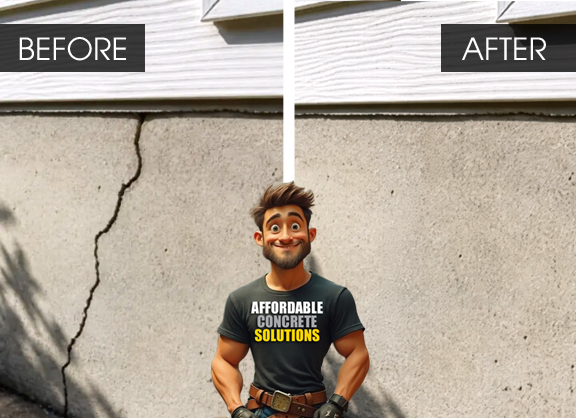
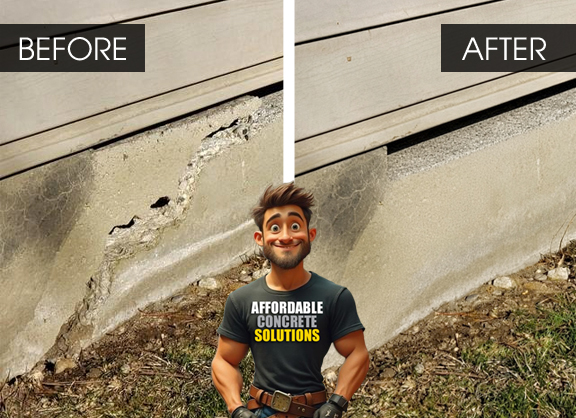
Cracks in your home’s foundation are more than just an eyesore. They can be an early warning sign of a serious structural problem. If you’ve noticed cracks in your basement walls, uneven floors, or gaps around your windows and doors, it may be time to have your foundation inspected. At Affordable Concrete Solutions, we provide professional cracked foundation repair in Evansville, Indiana, and surrounding communities. Our goal is to help homeowners protect their properties with dependable foundation repair solutions, including push pier installation.
Your home’s foundation supports everything above it. Therefore, when the foundation begins to settle or shift, the entire structure can experience problems. Fortunately, foundation settlement doesn’t have to mean tearing up your yard or rebuilding your home. Push piers offer an effective way to stabilize a settling foundation and, in some cases, lift portions of the structure back toward their original position.
At Affordable Concrete Solutions, we understand how stressful foundation problems can be. That’s why we work with homeowners to identify the cause of the damage and recommend the right repair approach. Whether you’re dealing with visible foundation cracks or more noticeable structural movement, we’re here to help.
If you’re searching for cracked foundation repair in Evansville, contact Affordable Concrete Solutions to learn more about our push pier foundation repair services.
Foundation cracks can develop for several reasons. In many cases, changing soil conditions play a major role. The soil beneath your home supports the weight of the structure. However, when that soil shifts, expands, contracts, or loses its ability to support the foundation, problems can develop.
Southwestern Indiana and western Kentucky experience changing weather throughout the year. Heavy rainfall, dry periods, freezing temperatures, and fluctuating moisture levels can all affect the ground around your home.
Some common causes of foundation damage include:
Soil Settlement: Soil beneath a foundation can compress over time. As a result, portions of the foundation may begin to sink.
Poor Drainage: Water that collects around your home can soften the soil and contribute to foundation movement.
Expansive Clay Soil: Certain soils expand when wet and shrink when dry. These changes can place stress on foundation walls and footings.
Improper Soil Preparation: When soil isn’t properly compacted during construction, settlement may occur later.
Erosion: Water moving beneath or around a foundation can wash away supporting soil.
Changes in Groundwater: Fluctuating groundwater conditions can affect the stability of the soil beneath a structure.
Although some small cracks are related to normal concrete shrinkage, others indicate foundation movement. Therefore, it’s important to understand what’s causing the problem before choosing a repair method.
Foundation problems don’t always appear overnight. In fact, many homeowners notice small changes long before they realize their foundation may be settling.
Pay attention to the condition of your home. Certain warning signs can indicate that the foundation is moving or losing support.
Horizontal Foundation Cracks
Horizontal cracks in basement walls can indicate pressure from the surrounding soil. These cracks deserve attention because they may be associated with wall movement or structural stress.
Stair-Step Cracks in Brick
Cracks that follow the mortar joints in a stair-step pattern can indicate differential foundation settlement. You may notice these cracks around exterior corners, windows, or doorways.
Doors and Windows That Stick
When a foundation shifts, the framing around doors and windows can become distorted. Consequently, doors may become difficult to open or windows may no longer close properly.
Uneven or Sloping Floors
Floors that feel uneven can sometimes indicate foundation settlement. You might notice that furniture sits unevenly or that certain areas of the floor feel lower than others.
Gaps Around Windows and Doors
New gaps around trim, ceilings, or door frames may develop when parts of your home begin moving. These changes can indicate structural movement that deserves further inspection.
Cracks in Interior Walls
Drywall cracks above doors, near windows, or along wall corners can sometimes accompany foundation movement.
Of course, not every crack means your foundation needs push piers. However, when several warning signs appear together, a professional inspection can help determine whether settlement is occurring.
Push piers are a foundation repair system designed to stabilize structures experiencing settlement. They provide additional support by transferring the weight of your home through engineered steel pier sections into deeper, more stable soil or suitable load-bearing strata.
Unlike a shallow repair that only addresses visible cracks, push piers target the underlying support problem.
The system typically uses hydraulic equipment to drive steel pier sections through the soil beneath the foundation. Installers attach the piers to engineered foundation brackets that connect to the structure.
As the pier sections advance, they reach soil capable of providing the required support. Once the installation reaches the appropriate depth and capacity, the system can help stabilize the affected foundation.
In certain situations, hydraulic equipment can also help lift settled portions of a structure. However, the amount of movement possible depends on the condition of the foundation, the structure, and the surrounding soil.
Push piers are particularly useful when a home experiences foundation settlement caused by inadequate soil support.
At Affordable Concrete Solutions, we want homeowners to understand what happens during a foundation repair project. Knowing the process can make the experience much less stressful.
Although every property is different, push pier installation generally involves several steps.
1. Inspecting the Foundation
First, we evaluate the visible foundation damage and look for signs of settlement. This includes examining cracks, foundation movement, and other structural concerns.
2. Determining the Repair Locations
Next, we identify the areas that may require additional support. Proper placement is important because the goal is to stabilize the affected portions of the foundation.
3. Preparing the Installation Areas
Our team prepares the locations where the push piers will connect to the foundation. This typically involves carefully excavating small areas near the footing to provide access for the installation equipment.
4. Installing Foundation Brackets
Specialized steel brackets connect the push pier system to the foundation. These brackets help transfer the structural load to the installed piers.
5. Driving the Steel Piers
Using hydraulic equipment, steel pier sections are driven into the ground beneath the foundation. Additional sections are added as needed until the installation reaches the required depth and support capacity.
6. Stabilizing the Foundation
Once the piers reach suitable supporting conditions, the system is secured to help stabilize the structure. Depending on the project, controlled lifting may also be possible.
7. Completing the Repair
Finally, the installation areas are completed and the foundation repair system is left in place to provide ongoing support.
Every installation requires careful planning. Soil conditions, foundation design, structural loads, and site access all influence the final approach.
When foundation settlement affects your home, finding a dependable repair solution matters. Push piers offer several advantages for properties with the right conditions.
Long-Term Foundation Support
Push piers transfer the weight of the structure to deeper supporting soil. This can help reduce continued settlement caused by weak or compressible soil near the surface.
Addresses the Underlying Problem
Rather than simply filling visible cracks, push piers address the lack of support beneath the foundation. This makes them an important option when settlement is the primary concern.
Can Help Restore Foundation Position
In some cases, push piers can provide controlled lifting of settled foundation sections. This may help improve certain structural symptoms, although complete restoration isn’t always possible.
Less Disruptive Than Major Reconstruction
Push pier installation generally requires localized excavation around the foundation. Therefore, it can often avoid the extensive demolition associated with major foundation reconstruction.
Long-Term Structural Stability
Once properly installed, the steel pier system remains beneath the foundation and continues transferring structural loads to supporting soil.
Most importantly, the right repair method depends on the specific foundation problem. Push piers are not the solution for every crack or structural concern. A proper evaluation helps determine whether they are appropriate for your home.
It’s tempting to cover a foundation crack and hope it doesn’t get worse. However, cosmetic repairs don’t correct foundation settlement.
For example, filling a crack with concrete or sealant may improve its appearance. Nevertheless, if the foundation continues moving, that crack can reopen or new cracks may develop.
Additionally, foundation movement can affect other areas of your home. Doors may become misaligned, floors may slope, and exterior masonry can experience additional stress.
Water intrusion is another concern. Foundation cracks can create pathways for moisture to enter basements and crawl spaces. Over time, unwanted moisture can contribute to damp conditions and damage nearby materials.
Addressing the underlying issue early can help prevent additional damage. Therefore, if you notice new or growing cracks, consider having your foundation evaluated before the problem becomes more extensive.
At Affordable Concrete Solutions, we understand that foundation problems can be an unexpected expense. However, protecting your home’s structural stability is an important investment.
We work with homeowners to identify foundation concerns and provide practical repair solutions. Our experience with concrete and foundation-related services helps us understand the importance of proper support, preparation, and workmanship.
Whether you have a few concerning foundation cracks or more noticeable signs of settlement, we’re ready to help you explore your options.
We proudly provide cracked foundation repair services in:
Evansville, Indiana: Foundation inspections and push pier solutions for homeowners experiencing settlement and structural cracks.
Newburgh, Indiana: Professional foundation support for homes dealing with shifting soil and settling foundations.
Boonville, Indiana: Foundation repair solutions designed to help protect residential structures.
Chandler, Indiana: Help addressing foundation cracks, settlement, and structural concerns.
Madisonville, Kentucky: Foundation stabilization options for homeowners experiencing foundation movement.
Owensboro, Kentucky: Dependable foundation repair services for cracked and settling foundations.
Henderson, Kentucky: Push pier foundation support and concrete-related solutions.
We understand the local soil and weather conditions that can contribute to foundation problems throughout the Tri-State area. Consequently, we focus on finding solutions that address the actual condition of each property.
Your home’s foundation is too important to ignore. Small cracks can sometimes be harmless, but growing cracks, uneven floors, and sticking doors may indicate a more serious problem.
At Affordable Concrete Solutions, we provide cracked foundation repair in Evansville and surrounding communities. Our push pier solutions help stabilize foundations affected by settlement by transferring structural loads to deeper supporting soil.
Don’t wait until foundation damage becomes a bigger concern. Let our team help you understand what’s happening beneath your home and what repair options may be available.
Contact Affordable Concrete Solutions today to discuss cracked foundation repair in Evansville, Newburgh, Boonville, Chandler, Madisonville, Owensboro, and Henderson, KY.
When it comes to protecting your home, a stable foundation makes all the difference!

Foundation cracks can develop in newer homes, too. Poor soil compaction, changing moisture levels, and drainage problems can all contribute to settlement. As the ground shifts, parts of the foundation may lose support. Consequently, cracks can appear even when a home is relatively new. If the cracks continue to grow or appear alongside other signs of movement, a foundation evaluation is a good idea.
Yes, Push Piers may help when multiple cracks are caused by foundation settlement. Rather than repairing each crack individually, the goal is to address the movement beneath the structure. Steel piers transfer the home’s weight to deeper, more stable bearing material. This can help stabilize affected foundation sections. However, the number and placement of piers depend on the home’s condition and the extent of the settlement.
Cracks that are wider at one end can sometimes indicate uneven foundation movement. For example, a section of the foundation may be settling more on one side than the other. This creates stress that can cause cracks to spread at an angle. Although crack patterns provide useful clues, they do not always reveal the exact cause. Having the damage evaluated can help determine whether Push Pier installation is needed.
Yes. A settling foundation can affect more than the walls and floors inside your home. Chimneys may also develop gaps where they meet exterior walls or roofing materials. Additionally, you might notice cracks in the brick or mortar. These changes can indicate that the chimney or part of the home is moving. The cause should be identified before deciding whether foundation repair or separate chimney work is necessary.
In many cases, yes. Even if your home has experienced settlement for several years, foundation repair may still be possible. Push Piers can provide additional support beneath qualifying foundation structures. Furthermore, they may be used to attempt a controlled lift when conditions allow. The amount of correction depends on the existing damage and structural limitations. A proper evaluation will help identify realistic repair goals.
Absolutely. Downspouts that release water too close to your home can cause moisture to collect around the foundation. Over time, this water may contribute to soil erosion or changing ground conditions. As the soil loses stability, parts of the foundation may begin to settle. Therefore, keeping gutters and downspouts working properly is an important part of foundation maintenance. Push Piers may help address settlement, but drainage problems should also be corrected.
Yes. Small cracks are not always a sign of serious structural damage. However, it is helpful to know why they developed. Some cracks are caused by normal concrete shrinkage, while others may indicate settlement. Additionally, early warning signs can be easier to address before more movement occurs. Keep track of changes in the cracks and watch for sticking doors, uneven floors, or gaps around windows.
Affordable Concrete Solutions helps homeowners address cracked foundations and settlement problems throughout the Tri-State area. We offer Push Pier foundation repair options designed to provide additional support beneath qualifying structures. Whether you have noticed stair-step cracks in your brick, separating walls, or uneven floors, we can help you explore possible solutions. Our service areas include Owensboro, Henderson, Madisonville, Evansville, Newburgh, Boonville, and Chandler. Contact Affordable Concrete Solutions to discuss your foundation concerns and learn whether Push Piers are right for your home.