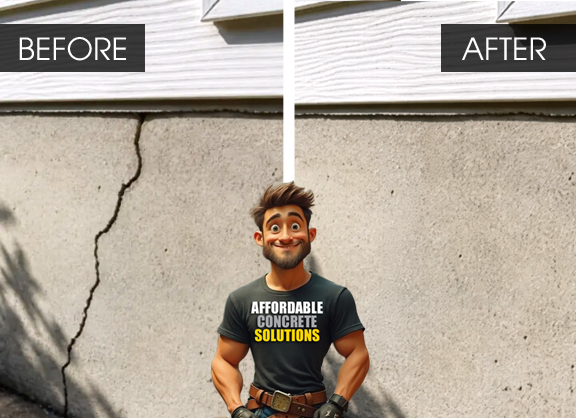
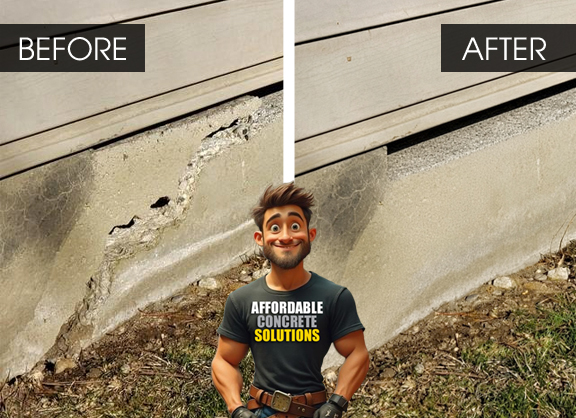
Your home’s foundation is one of the most important parts of the structure. It supports the weight of your house and helps keep walls, floors, and doorways properly aligned. However, when the soil beneath your home shifts or loses its ability to support the structure, foundation problems can develop. Small cracks may appear at first. Over time, you might notice uneven floors, sticking doors, or gaps around windows.
Although these changes can be frustrating, the right repair can help protect your home. At Affordable Concrete Solutions, we help homeowners address foundation settlement with practical solutions designed to improve structural stability. One option we use is push pier foundation repair. This method installs engineered steel supports beneath an existing foundation to transfer the building’s weight to deeper, more suitable supporting soil or load-bearing strata.
If you are looking for Foundation Repair in Madisonville, our team can help you understand the possible causes of your foundation problems and explore appropriate repair options. We proudly serve Madisonville, Owensboro, Henderson, KY, Evansville, Newburgh, Boonville, and Chandler.
Foundation damage can develop for several reasons. In many cases, the problem starts with changes in the soil beneath the home. Moisture fluctuations, poor drainage, soil settlement, and construction conditions can all affect foundation stability.
Understanding the cause matters because repairing the visible crack alone may not address the underlying problem.
A foundation depends on stable soil to support the weight of the building. Unfortunately, some soils compress under pressure, especially when they were not properly prepared before construction.
As the soil compresses, sections of the foundation may sink. When this movement occurs unevenly, stress develops throughout the structure. Consequently, cracks may appear in concrete foundation walls, brickwork, or interior drywall.
You might also notice that doors no longer close correctly or that floors seem to slope. These changes can happen gradually, making the problem easy to overlook at first.
Push piers can help address settlement caused by inadequate support near the surface. The steel supports are installed beneath the foundation and driven toward deeper, more suitable supporting ground. Once properly connected, they transfer the building’s load to the new support system.
Water has a major effect on the ground surrounding your home. Depending on the soil composition, excessive moisture can weaken supporting soil or contribute to erosion. On the other hand, extended dry periods can cause certain clay soils to shrink.
These changes can create uneven support beneath a foundation. For example, one side of the home may settle more than another because soil moisture varies around the structure.
In Madisonville and the surrounding region, seasonal weather can make moisture management especially important. Therefore, homeowners should pay attention to how water moves around their properties.
Keeping gutters clean, extending downspouts away from the foundation, and maintaining proper yard drainage can help reduce some moisture-related risks. However, if settlement has already occurred, these improvements may not be enough to correct the existing structural movement.
Water should flow away from your home rather than pool along the foundation. Unfortunately, clogged gutters, damaged downspouts, and improperly graded yards can direct rainwater toward the structure.
Over time, repeated exposure to excess water may soften supporting soil or wash soil away from areas beneath the foundation. As a result, parts of the structure can lose support and begin to sink.
Fortunately, correcting drainage problems can help reduce the risk of additional moisture-related damage. Nevertheless, existing foundation settlement may require a separate structural repair.
A professional evaluation can help determine whether the problem involves drainage, soil conditions, foundation movement, or a combination of factors.
Some soils contain clay that expands when wet and contracts as it dries. This repeated movement can place stress on foundation walls and affect the support beneath the structure.
As the soil changes, cracks may develop around windows, doors, and foundation walls. Additionally, homeowners may notice gaps between trim and walls or changes in floor levels.
Because soil conditions can vary across a property, the symptoms alone do not always reveal the cause. A proper assessment can help determine whether foundation settlement is occurring and whether push piers are an appropriate option.
The quality of the soil preparation and foundation construction can influence how a home performs over time. For instance, improperly compacted fill may compress under the building’s weight after construction.
Similarly, changes to a home’s structure can affect how weight is distributed. Additions, remodeling projects, and other modifications may place additional loads on certain sections of the foundation.
When the supporting soil cannot adequately handle those loads, movement may occur. Therefore, identifying the underlying cause is an important part of choosing the right repair.
Foundation problems do not always begin with dramatic damage. In fact, the earliest signs may be small changes that become more noticeable over several months.
Watch for these common symptoms:
Cracks in concrete foundation walls or floors.
Stair-step cracks in exterior brickwork.
Diagonal cracks near windows and door frames.
Drywall cracks that continue to widen or reappear.
Doors or windows that suddenly stick.
Floors that feel uneven or slope in certain areas.
Gaps between walls, ceilings, floors, or trim.
Separation between the house and an attached garage or addition.
Although some cracks are caused by normal shrinkage, others may indicate foundation movement. Pay particular attention when cracks grow wider or appear alongside other changes.
Early evaluation can help you understand the problem and determine whether structural repairs are needed.
At Affordable Concrete Solutions, we focus on repair options that address the underlying cause of foundation problems whenever possible. For suitable properties, push piers can provide additional support beneath a settling foundation without requiring complete foundation replacement.
Push piers are engineered steel supports installed beneath an existing foundation. During installation, hydraulic equipment drives steel pier sections into the ground. The building’s foundation or another suitable reaction system provides the force needed to advance the piers.
As the installation progresses, additional steel sections are added. The goal is to reach deeper, more suitable supporting soil or load-bearing strata that can support the structure more reliably than the unstable soil near the surface.
Once the installation reaches the required criteria, engineered brackets connect the piers to the foundation. This connection transfers the designated building loads to the new support system.
Depending on the site’s conditions, push piers can help stabilize the foundation and reduce further settlement. In some cases, the system may also allow portions of the structure to be lifted carefully.
Every property has different structural requirements. For that reason, we consider the foundation’s condition, the visible damage, and the surrounding site before determining an appropriate repair approach.
Step 1: Evaluate the foundation.
First, we examine visible cracks and other signs of movement. Changes in floor levels, sticking doors, and gaps around windows can provide useful clues about potential settlement.
Step 2: Plan the repair.
Next, the foundation’s construction, structural loads, soil conditions, and accessibility help determine the appropriate pier placement and installation requirements.
Step 3: Prepare the installation areas.
Depending on the property, localized excavation may be needed to expose the foundation and create access for the pier brackets.
Step 4: Install the steel piers.
Hydraulic equipment drives the steel sections into the ground. Additional sections are added until the system reaches the specified installation resistance or other appropriate criteria.
Step 5: Connect the piers to the foundation.
Engineered brackets attach the support system to the foundation. Once connected, the piers transfer the designated structural loads to the deeper supporting ground.
Step 6: Stabilize or carefully lift the structure.
Finally, the repair team determines whether stabilization alone or controlled lifting is appropriate. Not every foundation can or should be returned to its original elevation because lifting can place additional stress on the structure.
The goal is to improve foundation support while minimizing unnecessary disruption to the home.
When conditions are suitable, push piers offer several benefits for homeowners experiencing foundation settlement.
Improved structural support: Push piers transfer building loads to deeper, more suitable supporting ground. Consequently, the foundation relies less on weaker surface soils.
A targeted repair method: Depending on the damage, specific areas of the foundation may be supported without replacing the entire structure.
Potential for controlled lifting: In appropriate conditions, push piers may allow portions of a settling foundation to be raised carefully.
Localized excavation: Installation generally requires access at selected locations rather than excavation beneath the entire foundation.
Protection for your property: Addressing settlement can help reduce further structural movement and protect the long-term usability of your home.
However, results depend on soil conditions, foundation construction, structural loads, and the installation design. Push piers also do not automatically eliminate every existing crack or correct unrelated drainage issues. Therefore, addressing contributing moisture problems remains an important part of protecting your home.
Finding cracks in your foundation can raise plenty of questions. You may wonder what caused the damage, whether it will get worse, or how much work your home needs. At Affordable Concrete Solutions, we understand that foundation concerns deserve careful attention.
Our goal is to help homeowners understand their options and identify practical ways to address foundation settlement. Rather than focusing only on the visible damage, we consider whether the underlying support needs attention.
Whether you have noticed stair-step cracks in your brickwork, sloping floors, or signs of a sinking foundation, a professional evaluation can help determine the next step.
We proudly provide Foundation Repair in Madisonville and surrounding communities, including:
Madisonville, Kentucky
Owensboro, Kentucky
Henderson, Kentucky
Evansville, Indiana
Newburgh, Indiana
Boonville, Indiana
Chandler, Indiana
Properties throughout these communities can experience settlement for different reasons. Because every home has unique soil and structural conditions, the appropriate repair method depends on the specific problem.
Your foundation provides the support your home needs to remain stable. Although changing soil conditions and moisture levels can create problems, addressing foundation settlement can help protect your property from additional damage.
Push piers offer an effective option for many settling foundations. By transferring structural loads to deeper, more suitable supporting ground, they can help stabilize a home and may allow controlled lifting when conditions permit.
If you have noticed widening cracks, uneven floors, or doors that suddenly stick, do not assume the problem will resolve itself. Instead, let Affordable Concrete Solutions help you explore the available options.
Contact Affordable Concrete Solutions today to discuss Foundation Repair in Madisonville and find out whether push piers may be the right solution for your property. We are proud to serve Madisonville, Owensboro, Henderson, KY, Evansville, Newburgh, Boonville, and Chandler.
